Olive
Hackney, 2026
A replacement double-storey extension in Stoke Newington for a musical family who wanted warmth in every sense of the word. A home for cooking, hosting, board games, dancing and spilling out into the garden, brought up to a modern thermal standard, its warmth delivered by an air source heat pump.
“I know all the thinking and conversation that went into every decision in that kitchen, all the references, all the reasoning. But day-to-day I don’t think about any of it. I just like the room.” — Caspar
The Client
Our clients are a family with two teenage children and their cat, Oliver. Caspar works in the music industry, with a strong feel for how space shapes mood and experience. Jenny’s a researcher whose involvement in sustainability research kept thermal performance firmly on the agenda.
Art was a key driver of the design. Jenny’s tastes lean towards a softer, more traditional sensibility, influenced by early 20th Century art and with an affinity for Arts and Crafts design and 1970s fashion. Caspar’s preferences draw more on pop art, street art and modernist references including Le Corbusier and Eames. The family also own a substantial collection of East Anglian artwork inherited from previous generations, embedding a strong sense of personal and regional identity within the project. Music, meanwhile, is important to family life, shaping not just the atmosphere of the house but practical decisions around acoustics and materiality.
The Existing Property
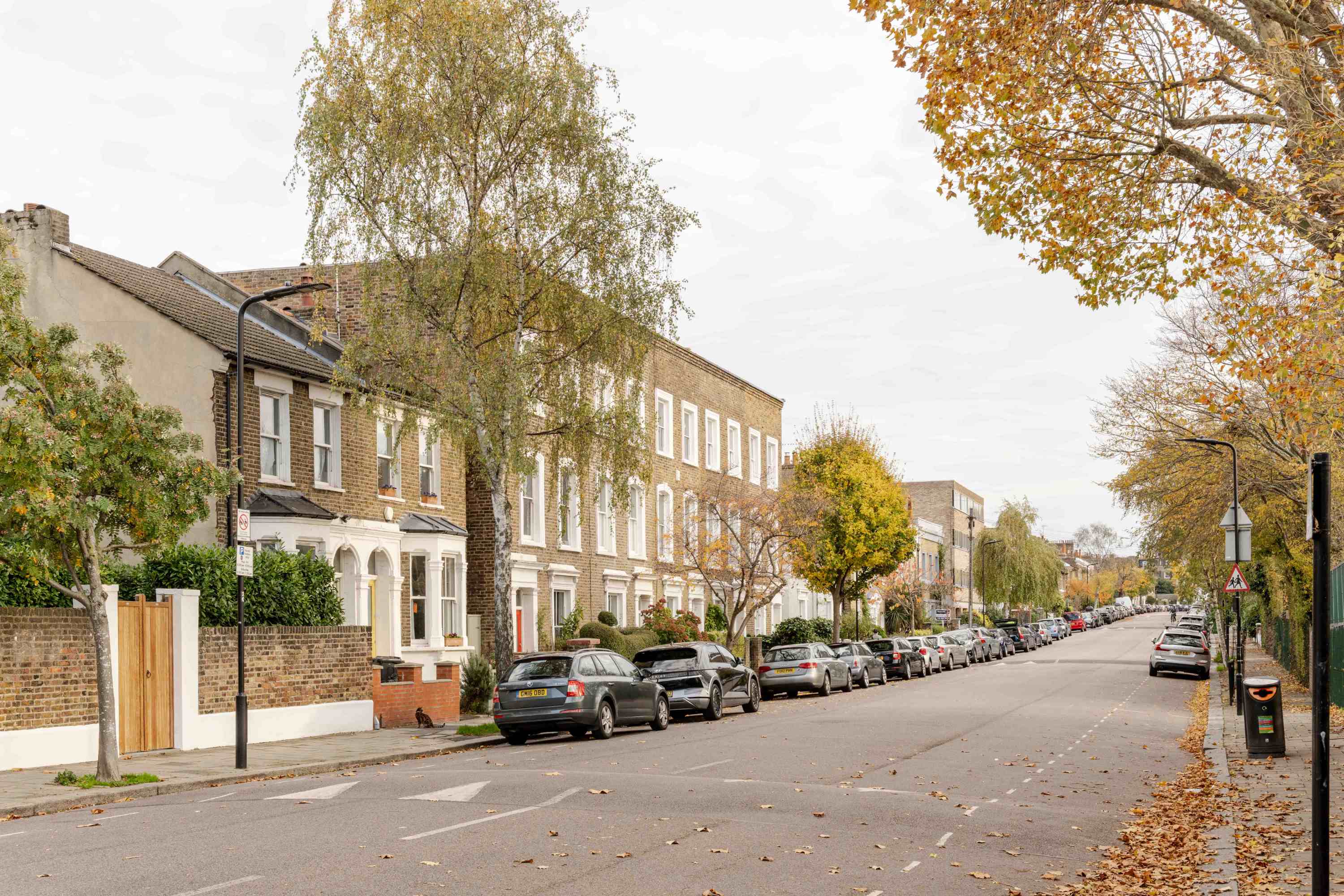
The existing property is a three-storey terrace in Stoke Newington with a beautiful, mature rear garden. The house had an existing double-storey extension, but one constructed very poorly; blank walls facing the garden, cold and damp rooms, and a layout that turned its back on everything beyond the back door.
Jenny describes it plainly: “In winter, you simply wouldn’t want to hang around in the kitchen. There were certain spots you could get warm, and that’s where you’d stay.” The existing layout compounded the problem, generous in footprint but cramped in arrangement, with Jenny and Caspar navigating around a peninsula island and stepping down between split levels to reach a utility space that consumed far more room than it deserved.
What made it a tipping point was the light. “There was sunshine hitting the back wall of our house every morning and we couldn’t get it inside, just one small door and no windows to speak of. We’d go and stand outside just to feel it. That was really the tipping point for doing something about it.”
The house also lacked any designated work-from-home space and nowhere for teenage children to spend time with friends independently. The space, in its existing form, discouraged the kind of family and social life the household was built around.
The Brief
The brief was to replace the existing extension and create a home that was relaxed, warm and genuinely sociable; a space that could accommodate long family dinners, big gatherings of friends, and the kind of evening that spills from the kitchen into the garden and back again. A generous dining space was essential: somewhere to feed a crowd, play board games late into the night, and not feel rushed.
Inspiration came from a day trip to Charleston Farmhouse in Sussex, the former home of the Bloomsbury Group artists. Jenny describes the visit: “It’s comfy, and a bit scruffy, and completely free. They painted on everything, anything that looked a bit plain, they just made beautiful. It doesn’t need to be perfect. The colour palette is gorgeous, those beautiful mid-tone pastels, and we knew that was the feeling we were after.”
The reference was never literal. “We weren’t trying to recreate it, we’re not living in a farmhouse. It was more about capturing that feeling: the natural materials, the colour, the sense of a space that’s really lived in and loved.” From that, a shared palette emerged; warm timbers, earthy terracotta, soft greens and buttery yellows, a contemporary interpretation that balanced both clients’ sensibilities and felt like the natural meeting point between their tastes.
The house needed to work hard: for a family of musicians, enthusiastic cooks, entertainers and gardeners. A place for parties, for movement, and, as it turned out, for dancing.
The Process
From the outset, the project was shaped as much by conversation as by drawing. Jenny arrived at the first studio meeting having quietly assembled her own colour palette, and found that we had independently arrived somewhere very similar. That early alignment set the tone for what followed.
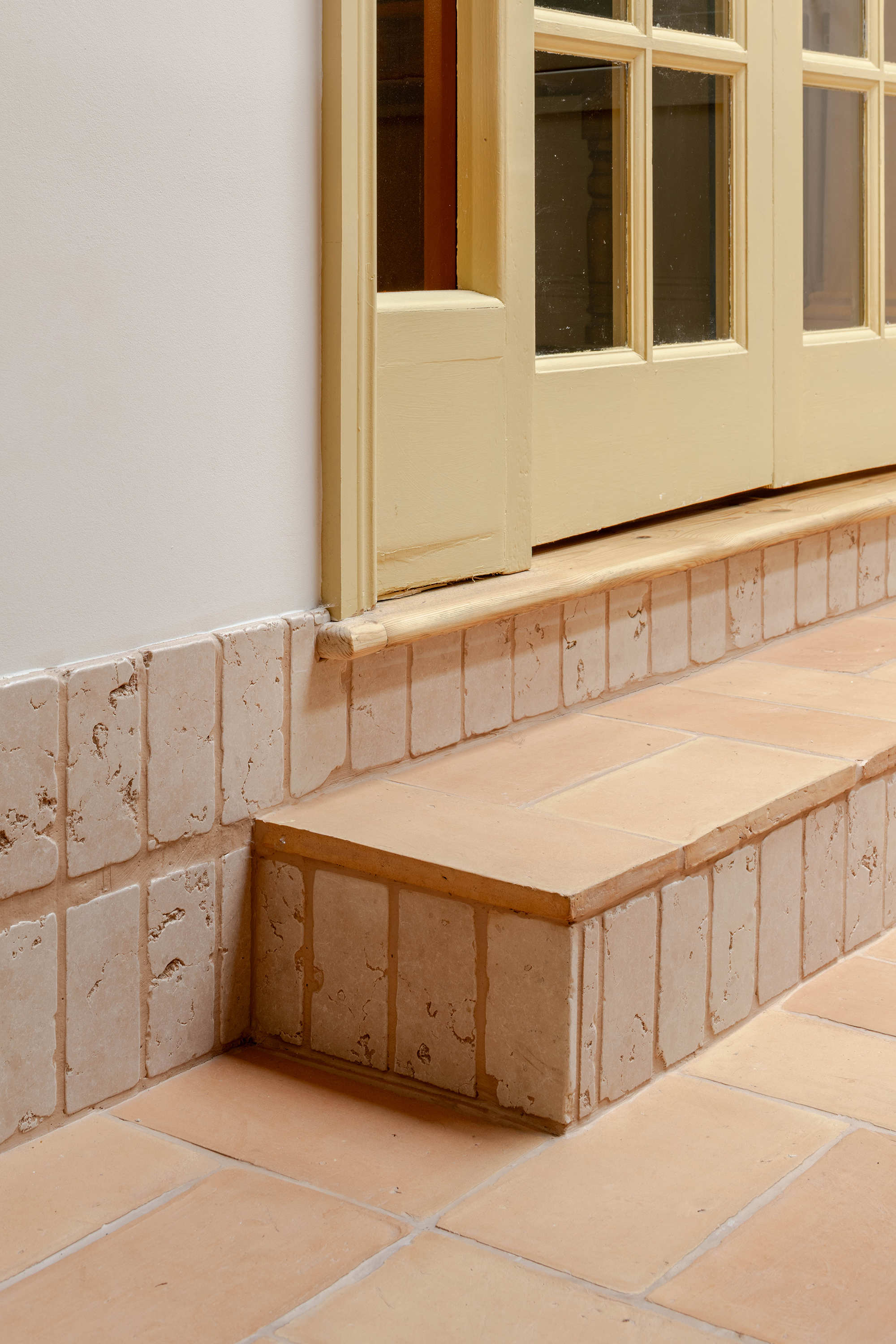
Throughout the project, we established a clear material and spatial language, then tested and sharpened it through open conversation with the clients. The marble skirting boards emerged from that process, a detail Jenny admits she would never have chosen independently, and are now one of her favourite parts of the house.
Where the clients felt strongly, such as with the terracotta floor tiles and the double-doored pantry, we worked those instincts into the broader scheme, ensuring they landed with clarity rather than compromise. The best outcomes came not from deference, but from a shared commitment to getting the details exactly right.
Caspar reflects on the experience: “It felt like a genuine creative collaboration, not one side imposing ideas on the other, but all of us working something out together.”
The Extension
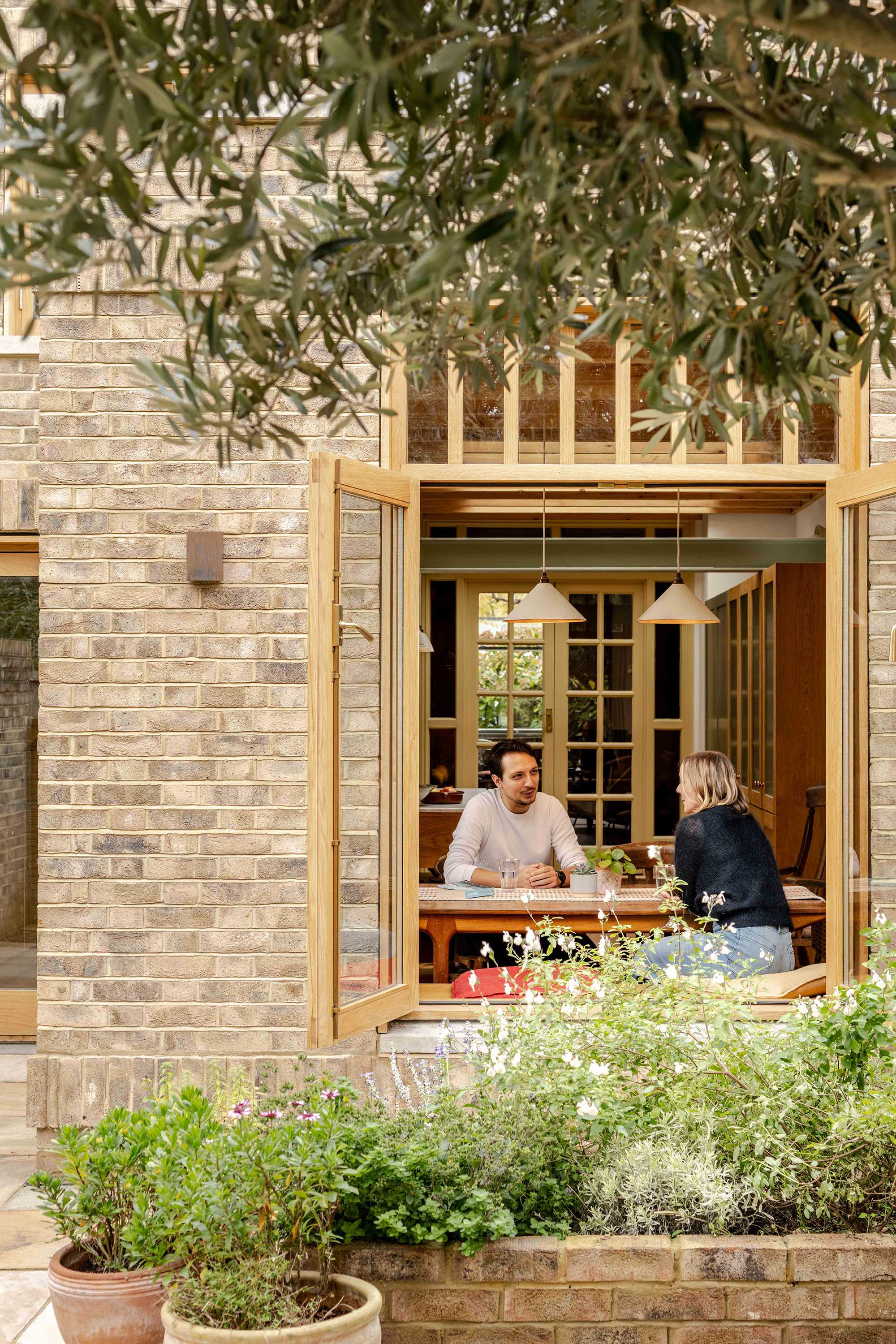
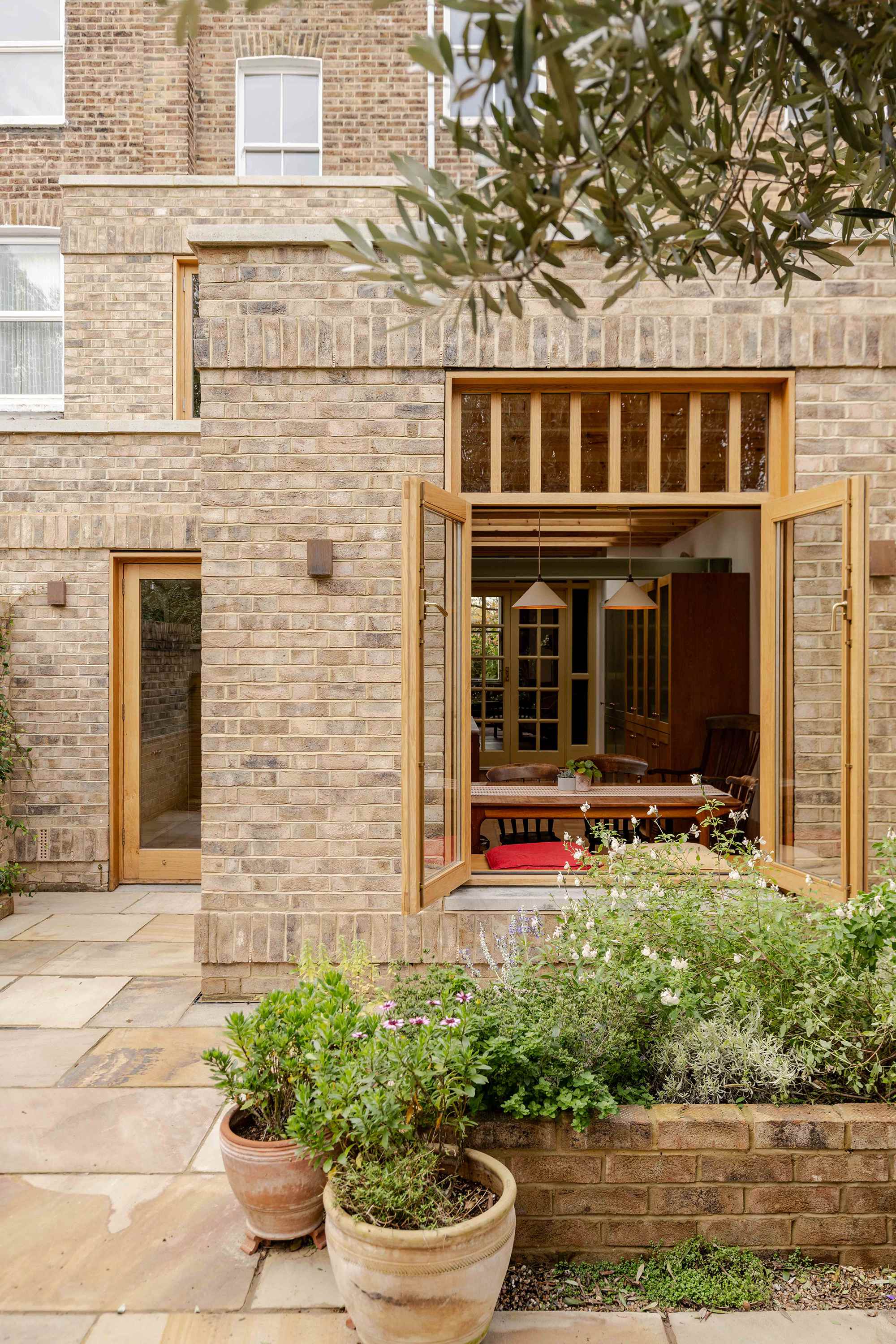
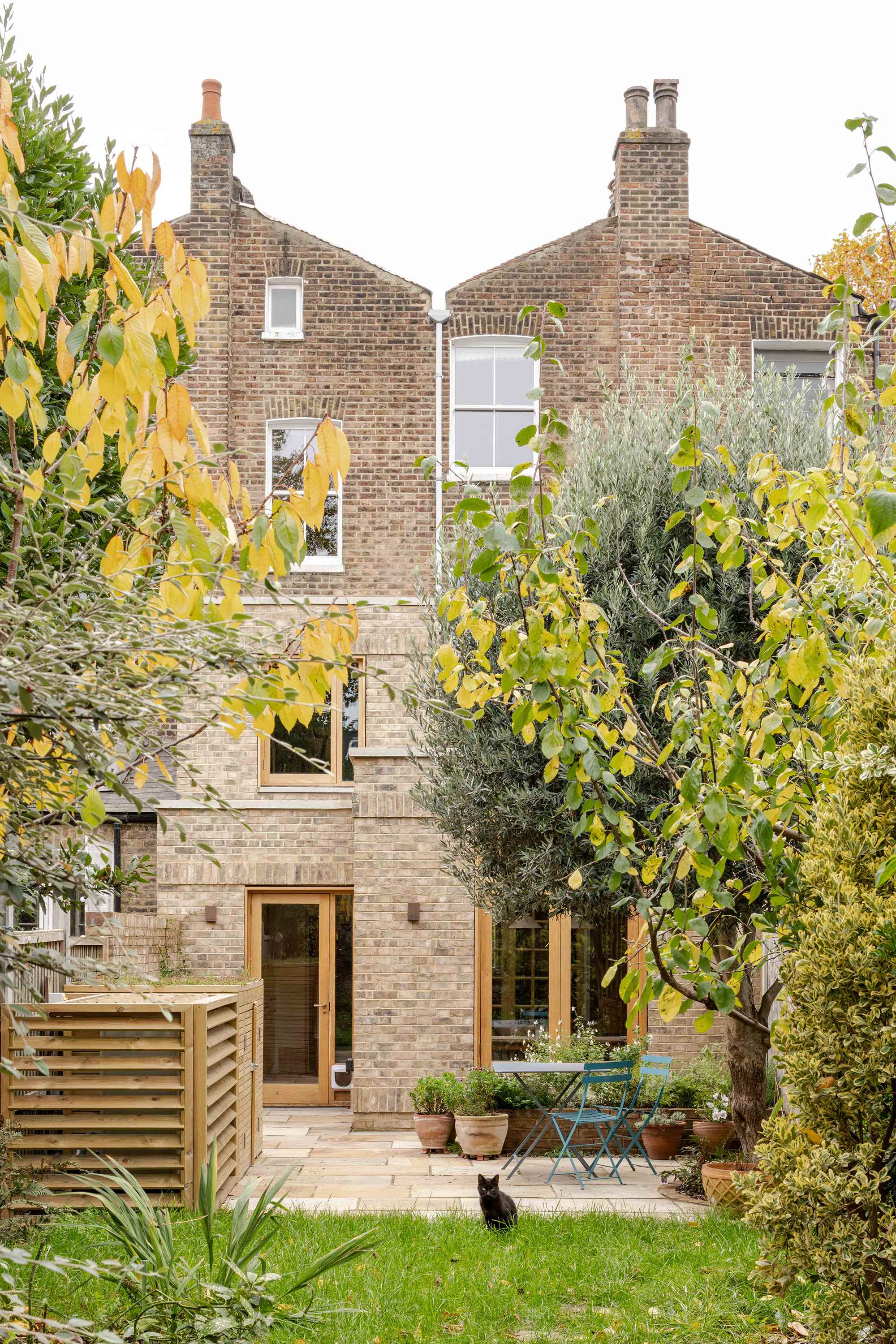
The new double-storey extension is composed of three stepping, interlocking volumes in reclaimed brickwork with horizontal banding and warm timber window frames with double glazing. The air source heat pump is discreetly housed within a timber-screened external store with its own green roof, while a matching brick planter softens the threshold between house and garden.
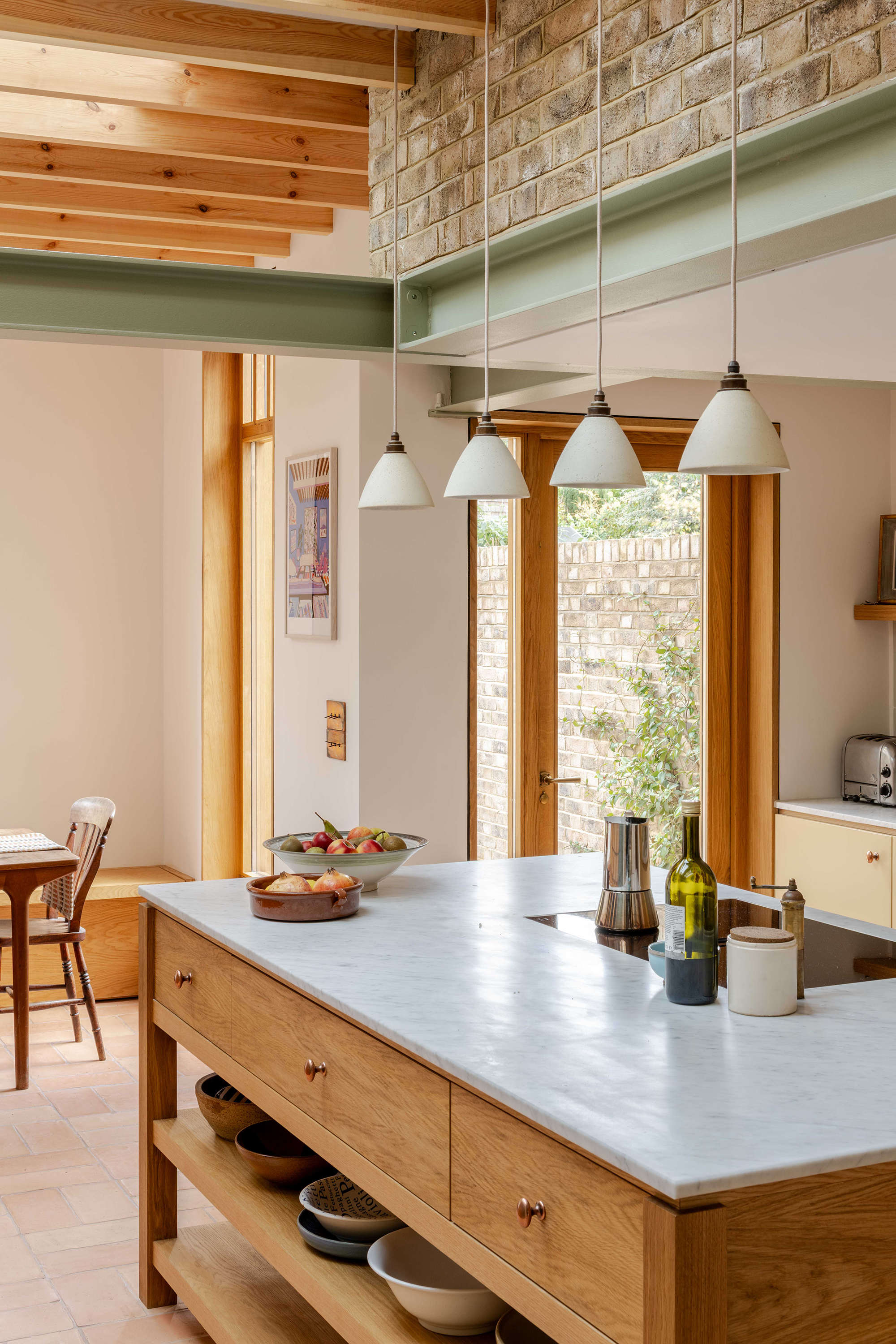
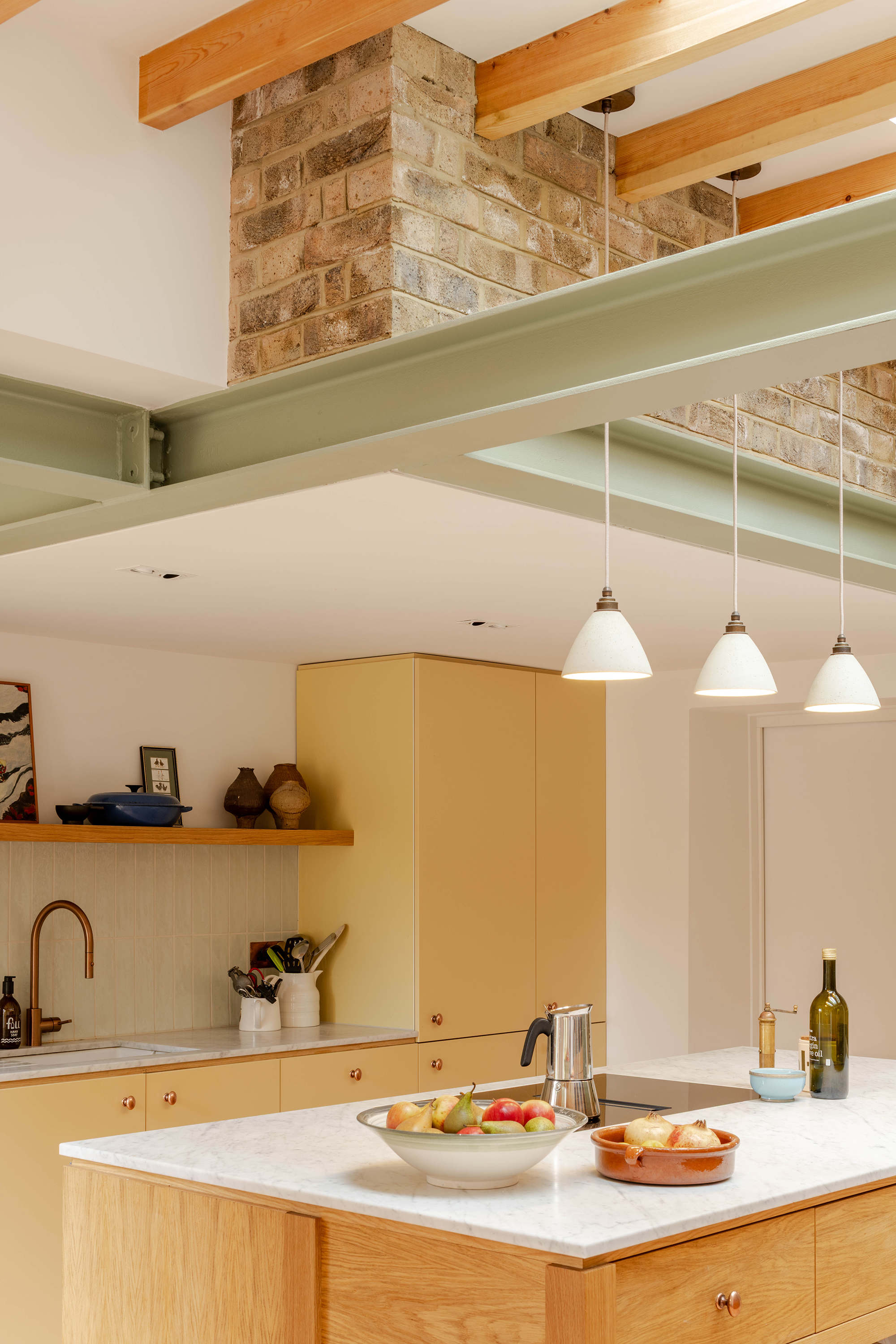
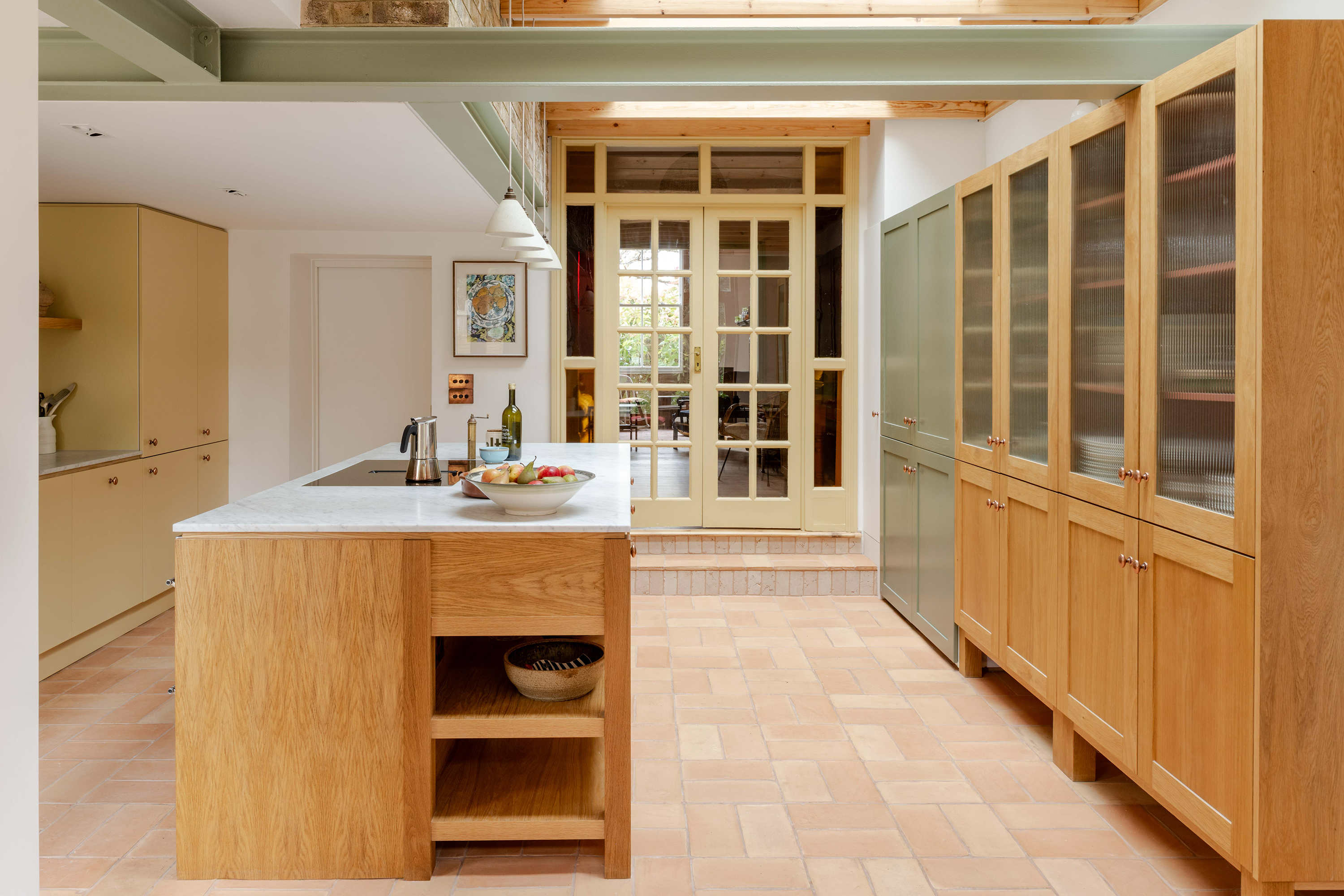
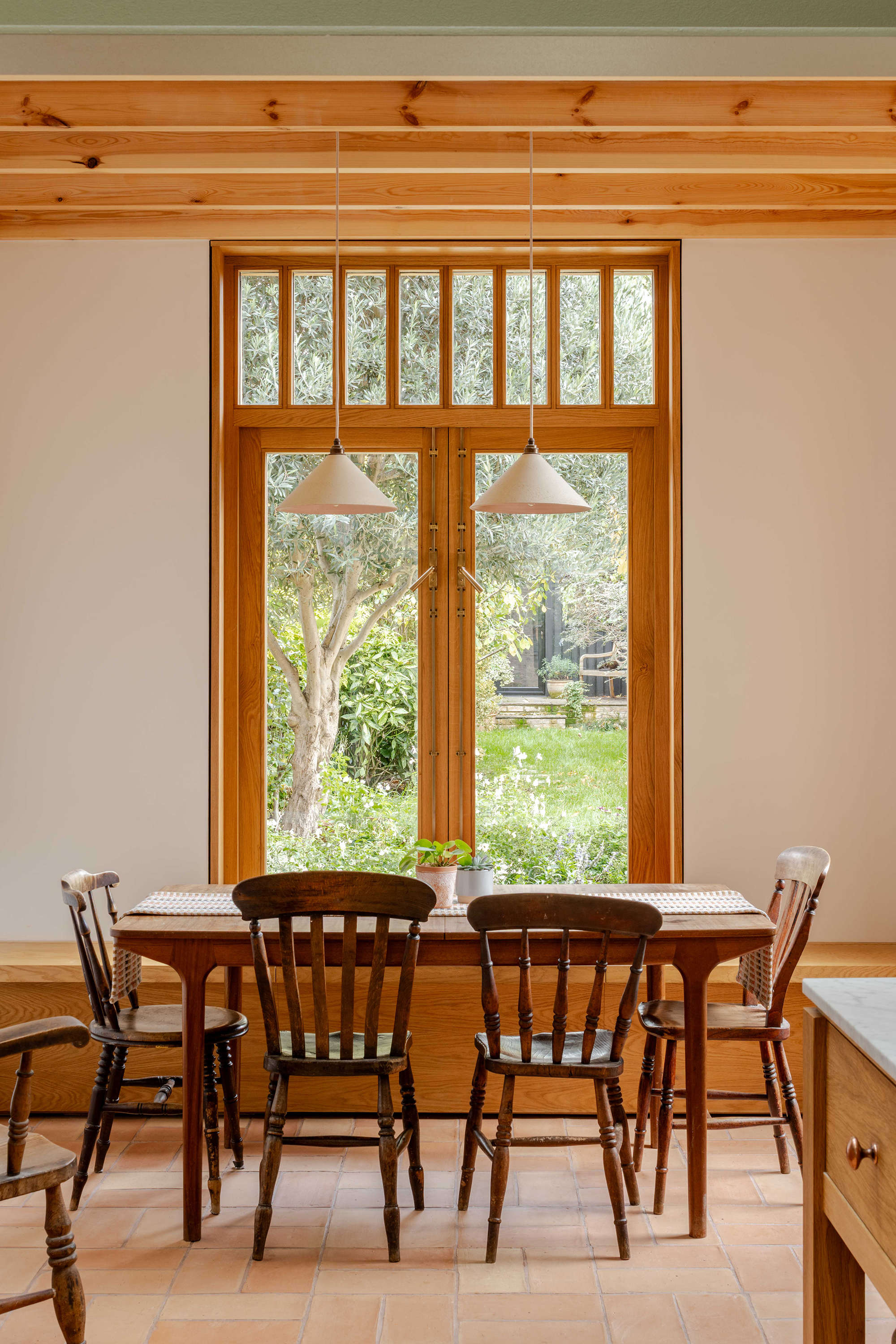
On the ground floor, the kitchen sits at the centre of the plan, the engine of the house, with cooking, eating and garden access arranged around it. The large dining table extends to the furthest point of the extension, facing the garden, while a window seat and picture window keep the landscape present even in winter. The new layout resolved the frustrations of the previous arrangement: “Everything’s just in the right place. It feels genuinely luxurious, though I should say we’re easily pleased. We still think a good pan drawer is fairly ingenious.”
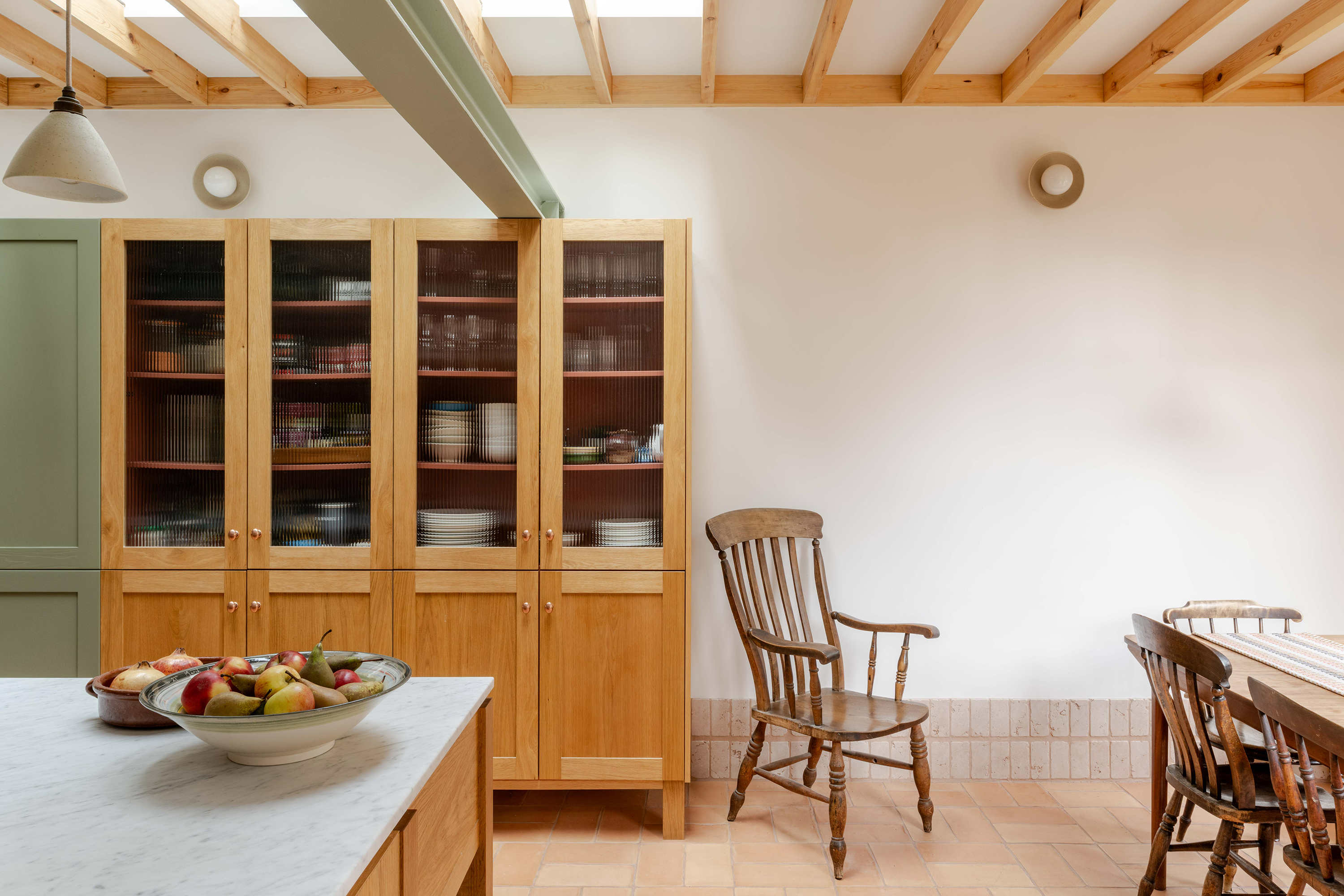
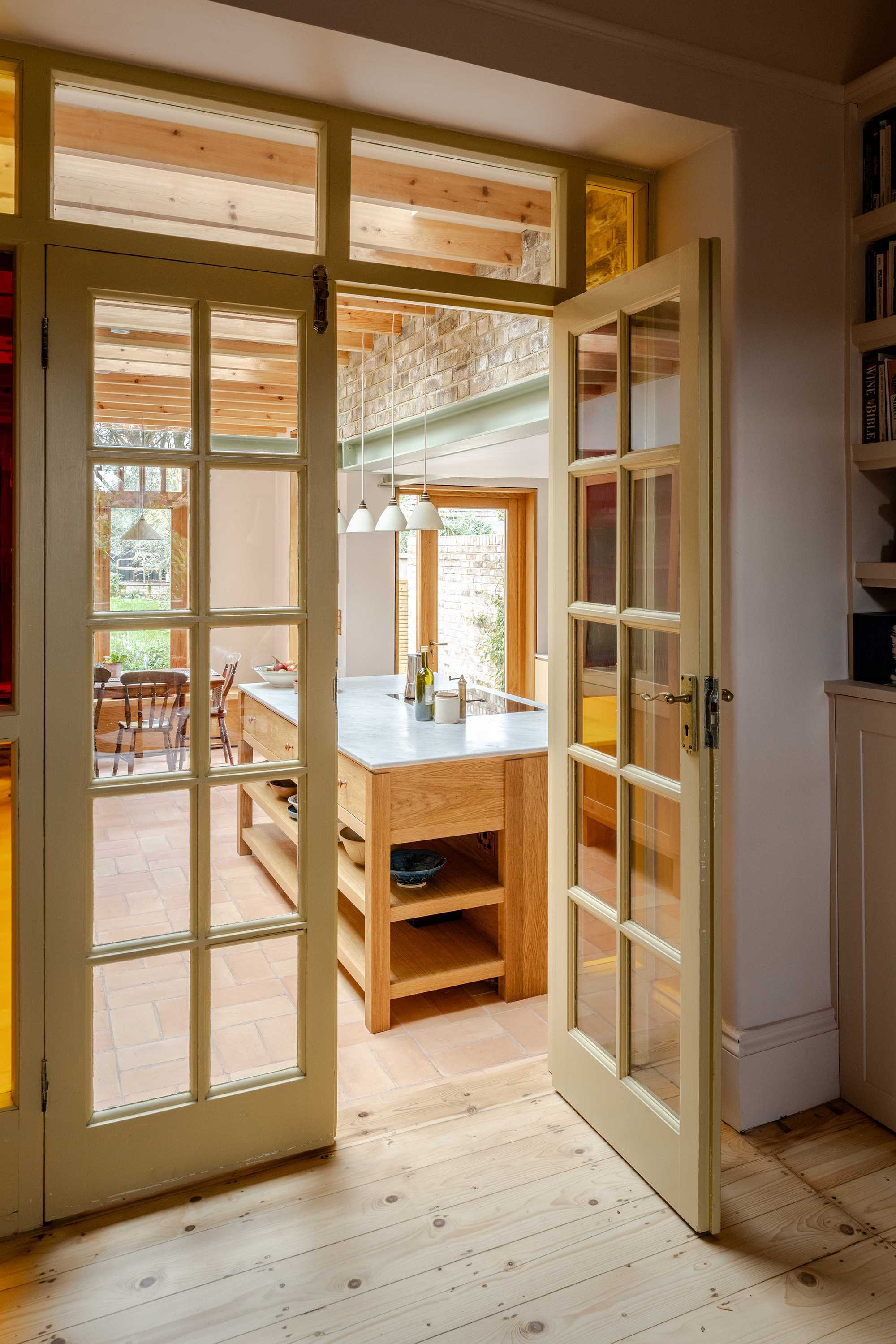
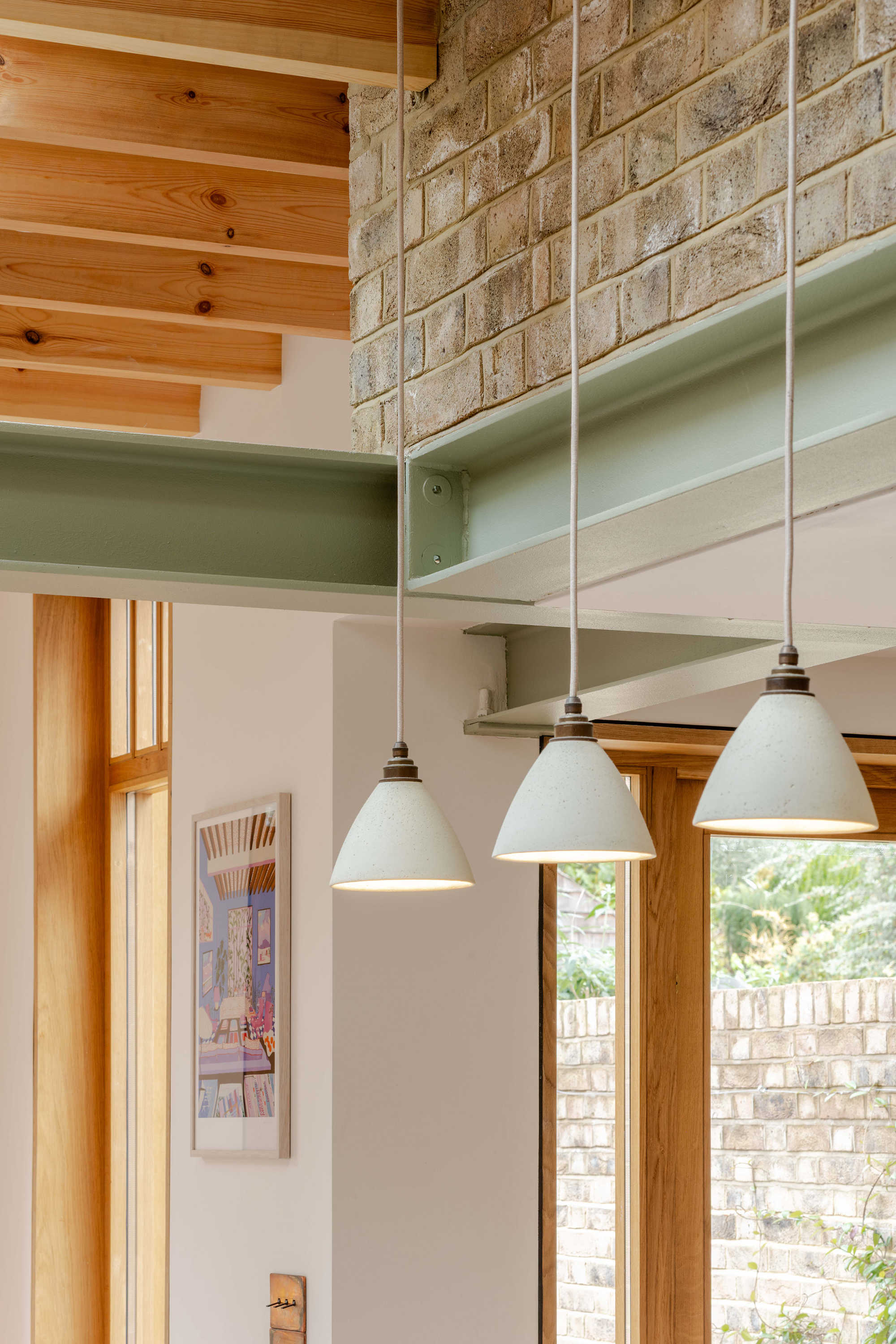
Tall timber windows with traditional toplights emphasise the height of the space. Rooflights sit within the flat roof, supported by exposed timber joists that filter daylight from above, while steel beams span across the room and the existing brickwork of the outrigger remains visible below. Materials are expressed rather than concealed, and the bespoke kitchen joinery is designed to read more like freestanding furniture. Repurposed stained glass doors salvaged from the existing house sit alongside, a contemporary nod to Arts and Crafts influences.
Materials and Atmosphere
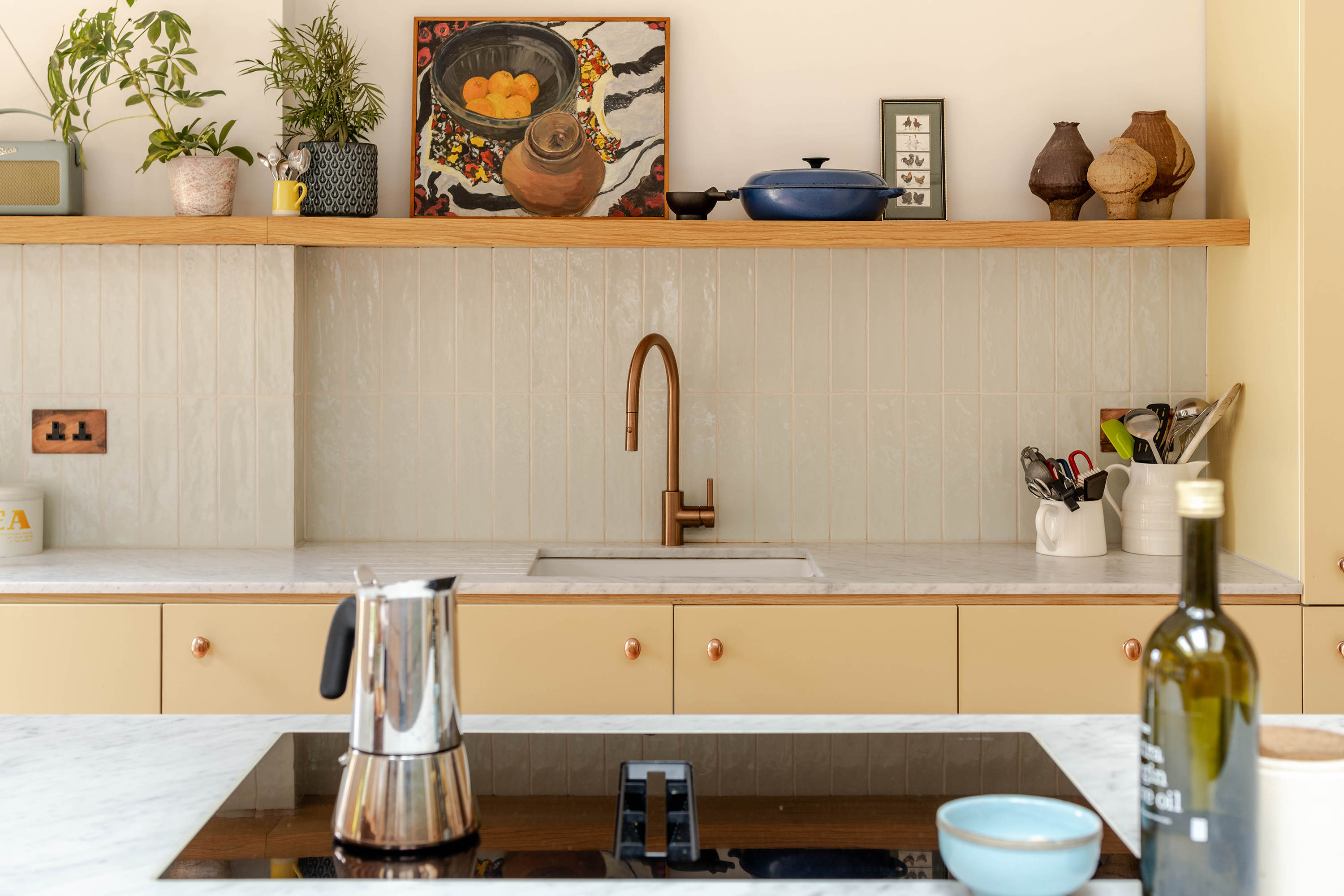
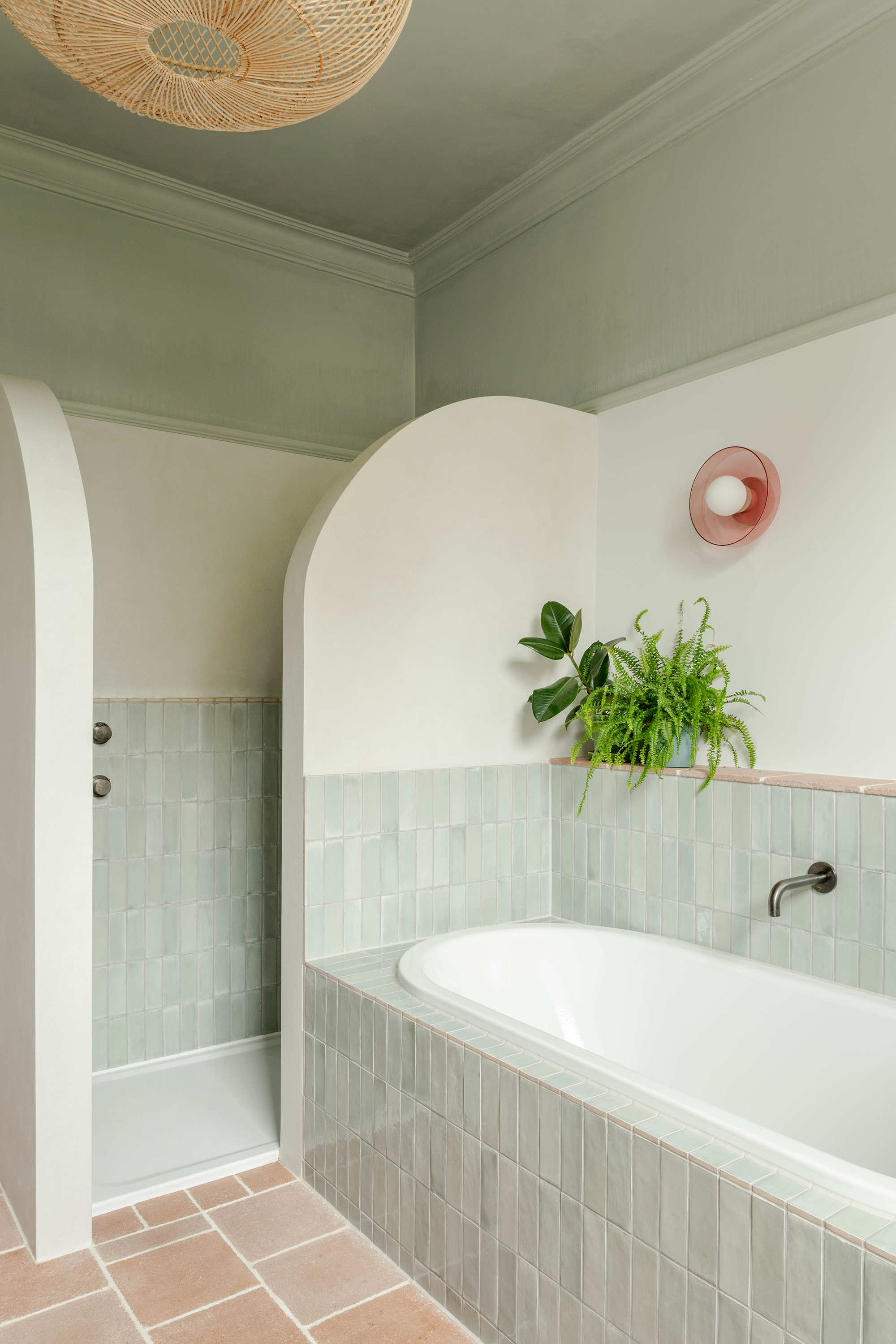
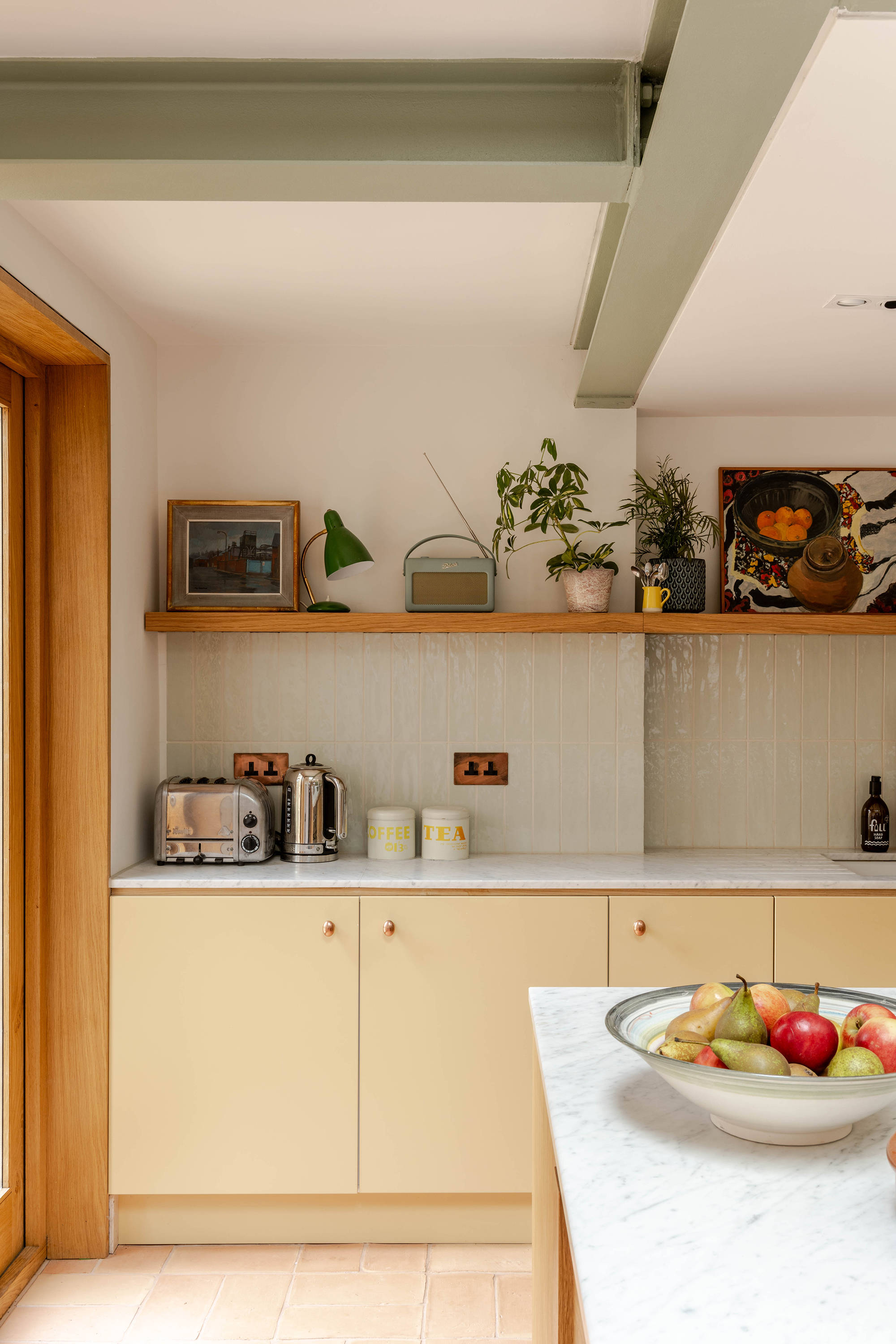
The interior palette brings the scheme together: terracotta floors, warm timber, exposed brick and calm pastel paint, with buttery yellow kitchen cabinetry and soft green steels. “When you take your eye around the room, you’ve got the brick, the terracotta, the marble, the oak. They’re all a little bit artisanal, a little bit natural. It came together into something cohesive, without ever feeling too rustic or too precious.”
Caspar’s professional sensitivity to acoustics, shaped by years in music production, also informed the design. Hard, echoing spaces were a concern from the outset, and the layering of timber, brick and natural materials helps soften the sound of the room. The result is a space that feels warm to the ear as well as the eye.
Between the extension and the original house sits a generous intermediate room deliberately left without a fixed purpose: bikes, books, somewhere to pause between spaces. “I really like having that space in the middle of the house with no fixed purpose,” Jenny explains. “It makes the house feel more spacious. It’s like a big, generous hallway.”
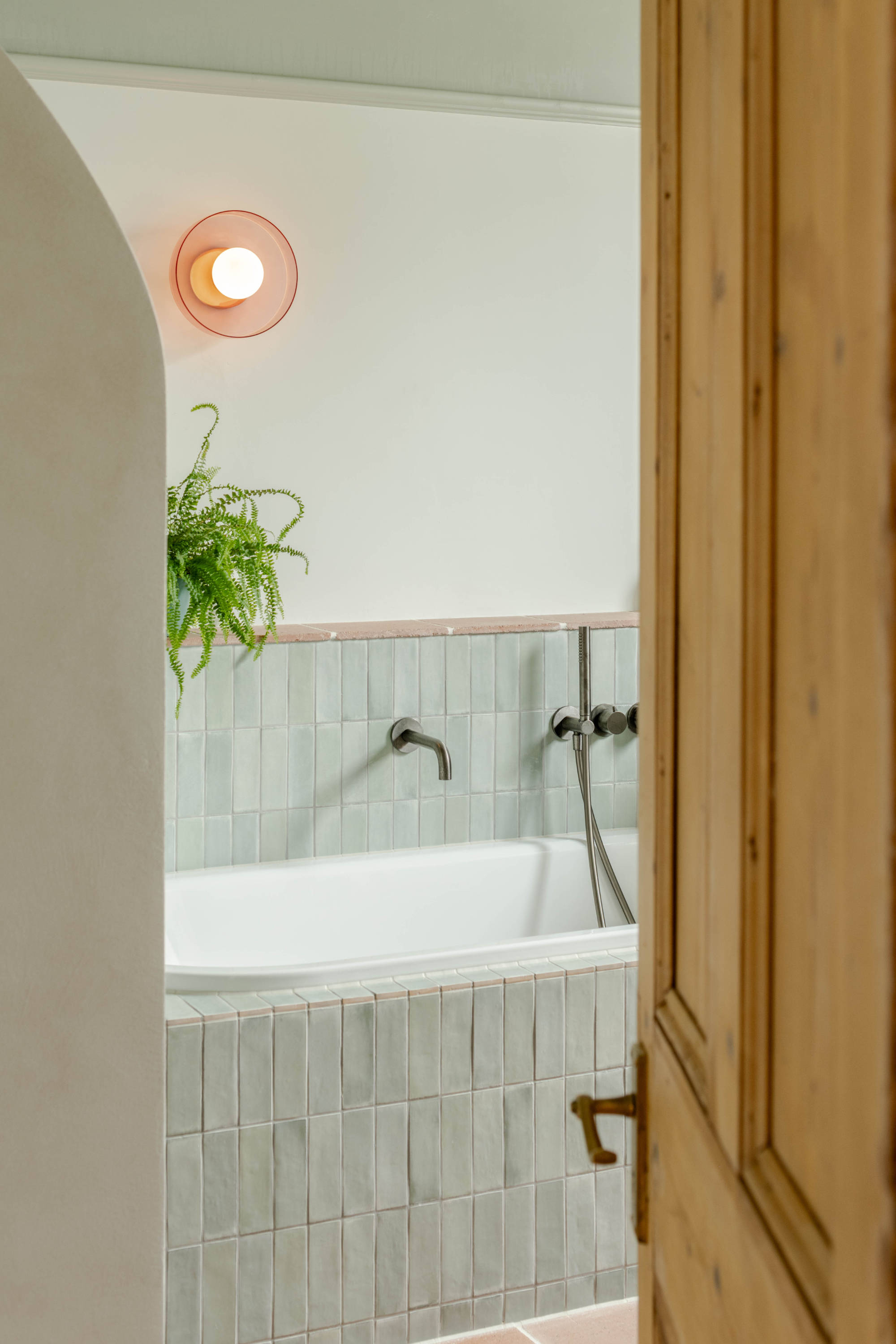
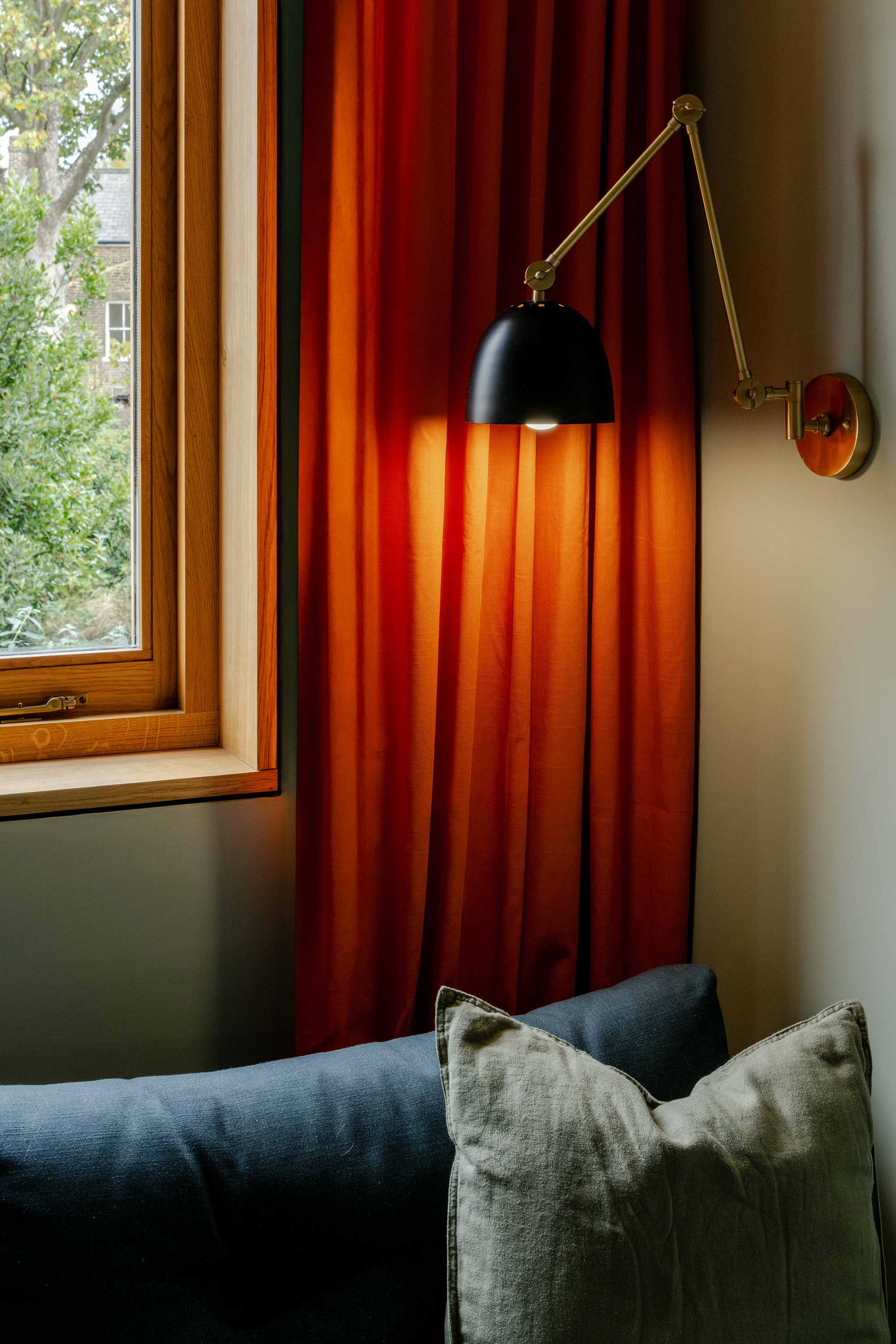
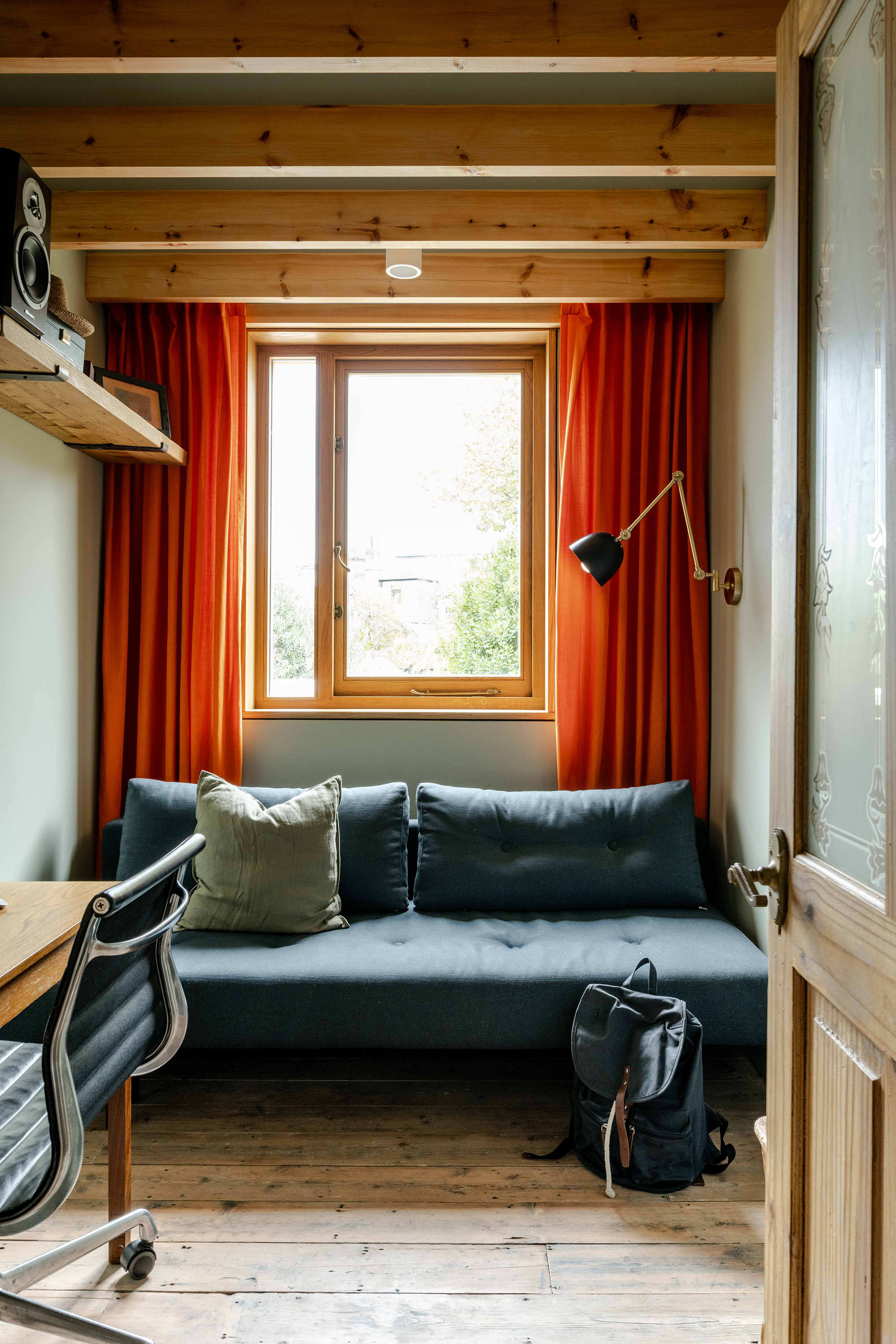
Elsewhere, smaller spaces reflect the family’s personality. The study introduces mid-century-inspired joists and orange curtains, while the refurbished bathroom continues the soft green and terracotta palette established below. Jenny’s verdict is telling: “Even if I have to be up at quarter to six for an early work call, getting to have a shower in that bathroom makes it something to look forward to.”
Life in the House
What the project has delivered, above all, is warmth, and a home that people want to be in.
“There’s so much more life around the kitchen table than there ever was before. The kids do their homework there. Our son had his whole group of friends round for a Christmas dinner.”
The space has proved itself for parties too. On New Year’s Eve, the dining table was moved aside, the decks went in the kitchen, and the floor in front became the dance floor. “You wouldn’t necessarily design a kitchen with that in mind, but it just works.”
Perhaps the most quietly satisfying endorsement came from a house-sitter. “My sister came to stay with some of the family while we were away, someone who’s always busy, always wants to be out doing things. One afternoon she just said: should we just stay in? It’s really nice here. That felt like a pretty good endorsement.”
Low Energy Home
On the sustainability side, the air source heat pump has performed beyond expectations. Jenny, who came to the project with a professional interest in low-carbon systems, describes the experience of living with it: “I love that it’s just an even temperature all the time. The radiators are hardly warm and yet the house is so snug. You don’t have that push and pull of turning things up and down. It just keeps everything going so nicely.” Early energy bills suggest the household is on track for around £2,000 a year for all energy use, a striking figure for a London family home of this size.
“We’re still friends with our architects at the end of it all. So many people aren’t, after a build. That says more than anything else, really.” — Jenny

Thank you’s
Contractor – Marc Samuel London
Engineer – Structural Design Studio
ASHP Engineer – Next Step
Photography – French and Tye
BVDS Project Lead – Vladimir Krastev
About us
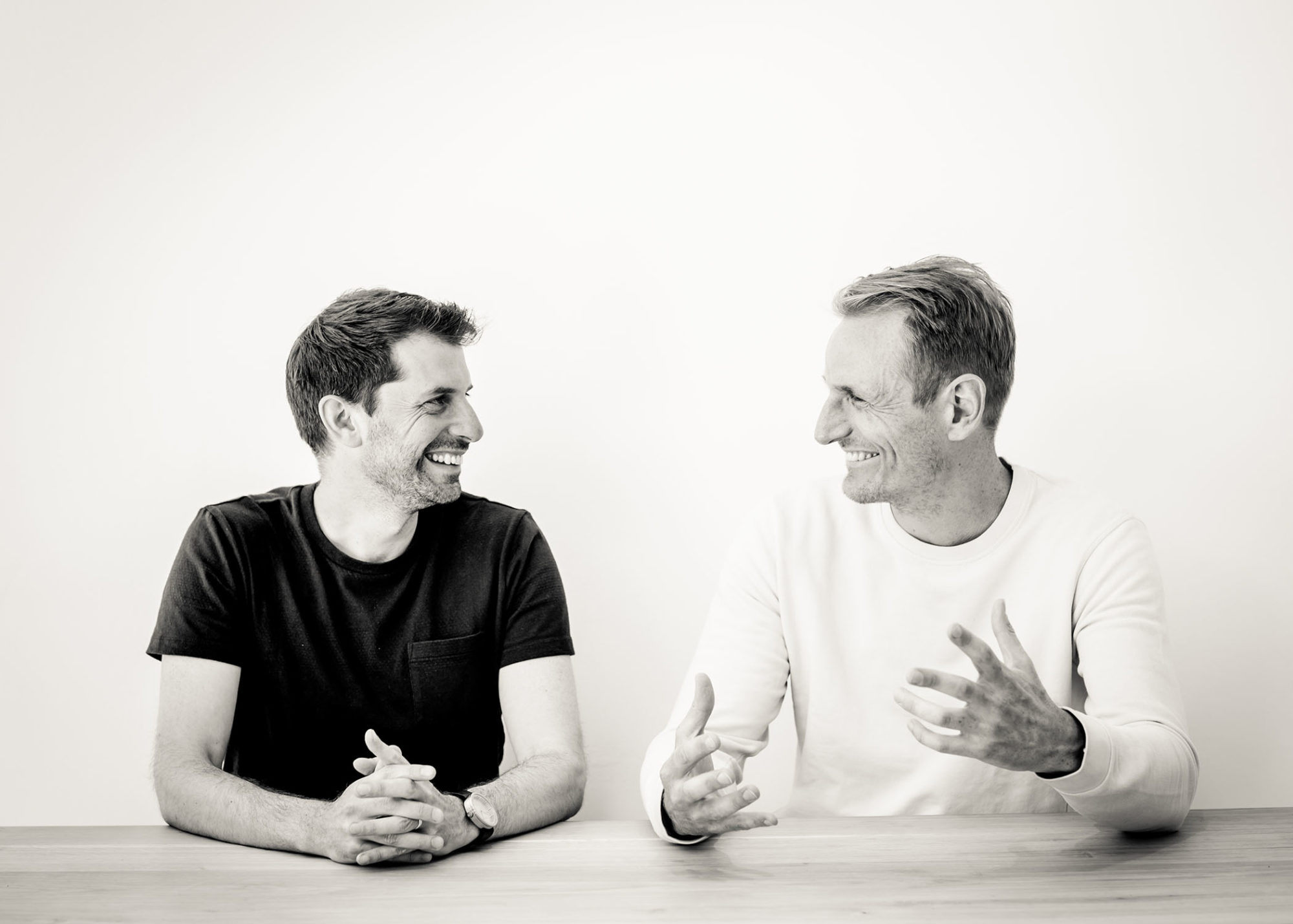
Bradley Van Der Straeten is an award-winning architecture studio that believes thoughtful, creative design can improve everyday life. Since 2010, founders George Bradley and Ewald Van Der Straeten have been making colourful, fun, and liveable homes for people who are emotionally invested in their space. Read more about how we work by clicking here.
If you’re starting a project and want a team that brings ideas, clarity, and experience, while keeping the process collaborative, enjoyable, and a little unexpected, we’d love to hear from you. Get in touch to start a conversation.